

Research in Action: Alcohol Policy Measures That Reduce Cancer Burden
Research in Action
24 July 2026
Can cancer warning labels and minimum unit pricing directly reduce cancer burden in Canada?
A new study led by researchers at the University of Victoria’s Canadian Institute for Substance Use Research (CISUR), in collaboration with the Canadian Centre on Substance Use and Addiction and Public Health Ontario, focused on two alcohol policy measures — cancer warning labels on alcoholic beverages and minimum unit pricing. These measures could prevent hundreds of cancer diagnoses and deaths in Canada.
Nearly 700 Canadians are diagnosed with cancer each day, and more than 200 die from the disease, according to the Canadian Cancer Society. More than 250,000 new cancer cases were projected in Canada for 2025. A substantial share of these cases is considered preventable, with alcohol and tobacco use among the leading modifiable risk factors.
The study, published this month in The Lancet Public Health, estimates that in Canada, in 2022 alone, alcohol was responsible for 9,498 new cancer cases and 3,866 cancer deaths.
For the first time in Canada and internationally, the author team modelled five alcohol policy scenarios estimating the impacts of cancer warning labels on alcohol containers, minimum unit alcohol pricing, and a combination of both on alcohol-attributable cancer cases and deaths.
The combined cancer warning label, plus a minimum unit price of $2.00 per standard drink scenario, is projected to reduce the number of new alcohol-attributable cancer cases by 7.1 per cent and cancer deaths by 5.6 per cent. The greatest health gains were observed among younger adults and populations with lower-income, indicating potential to reduce health inequities.
This research is particularly timely, as on March 10, 2026, Canada's Senate started the third reading of Bill S-202, legislation proposing to add cancer warning labels to alcohol packaging.
To better understand the findings of the study, we spoke with Dr. Erin Hobin, Senior Scientist in the Population Health portfolio at Public Health Ontario, about why alcohol warning labels are effective and the possible reasons Canadians are buying less alcohol.

Q: Alcohol consumption is a major global public health issue. However, many Canadians remain unaware — or are only beginning to understand — that alcohol is a carcinogen linked to multiple types of cancer. Why are studies on alcohol policies important?
Studies on alcohol policies matter for Canadians because alcohol is the country’s most widely used substance and is a major driver of preventable harm – alcohol contributes to thousands of deaths, hospitalizations, injuries, and chronic diseases every year. Understanding what policies are effective for reducing alcohol-caused harms (and what doesn’t work) supports governments, health systems, and communities make decisions that protect health, support equity, and reduce health care costs.
Alcohol-related harm disproportionately affects people with lower socioeconomic status despite these populations consuming similar or lower levels of alcohol. Strong evidence on policies that can prevent and reduce population-level alcohol harm and narrow health inequities – such as minimum unit pricing and alcohol warning labels – is critical to informing public health action. Policy research plays a vital role in identifying inequities and providing evidence to ensure interventions are effective and do not inadvertently widen health gaps.
Q: Why are cancer warning labels and minimum unit pricing effective in reducing alcohol consumption and health harm?
Cancer warning labels and minimum unit pricing are effective because they address two complementary drivers of alcohol consumption: information (what people know about risk) and economics (the price and affordability of high-strength alcohol).
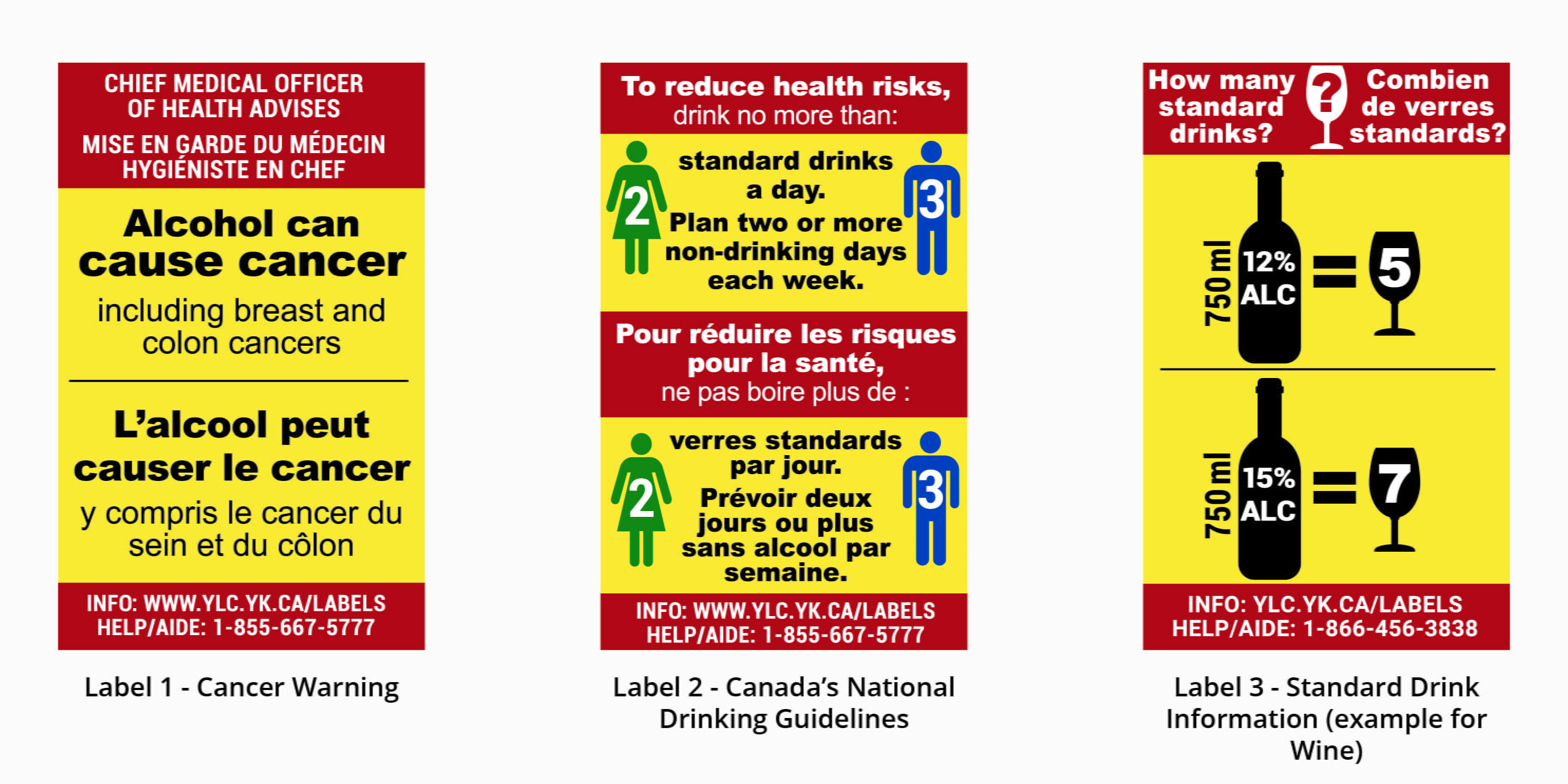
Cancer warning labels are a unique type of information-based intervention. They provide clear, accessible health information when purchasing, pouring, or consuming alcohol. Their primary function is to correct a knowledge gap. By repeatedly exposing consumers to this information, labels act as timely reminders that can help people make more deliberate and informed decisions about if or how much they choose to drink.
Minimum unit pricing is a policy that establishes a floor price per standard drink, which raises the cost of the cheapest, highest strength alcohol products – the products most strongly associated with alcohol-caused harm. Because minimum unit pricing targets only low-cost, high-strength alcohol beverages, it effectively reduces consumption among those at highest risk, including people with patterns of high and heavy drinking, and households with lower income. Minimum unit pricing has been shown to reduce alcohol sales and lead to measurable declines in alcohol-attributable hospitalizations and mortality in Manitoba, Scotland, Ireland, Wales, and the Northern Territory of Australia.
Together, cancer warning labels and minimum unit pricing are powerful because they change both the mind and the market. Warning labels reduce demand by increasing awareness and shifting perceptions of alcohol’s health risks, while minimum unit pricing reduces the supply of cheap, high-strength alcohol that drives disproportionate harm. This pairing reflects a comprehensive public health approach – informing consumers while simultaneously addressing the environmental factors that influence consumption.
Importantly, evidence from my Northern Territories Alcohol Labels Study as well as international studies indicate that as consumers become aware of the alcohol-cancer link, public support for minimum unit pricing policies increase. This suggests that warning labels not only reduce harm directly but also create a more informed public dialogue that strengthens support for alcohol policy efforts.
Q: What do you think are the biggest misconceptions about your research on alcohol warning labels?
Alcohol warning labels are not a silver bullet. But neither were tobacco warnings, seatbelt reminders, or nutrition labels on their own. At its core, alcohol warning labels are an effective tool for communicating alcohol’s health risks to virtually all consumers and enabling them to make more informed decisions about if or how much they choose to drink.
Q: Statistics Canada released data in March 2026 that show Canadians' consumption of alcohol is declining for the fourth year in a row. Why do you think Canadians are buying and consuming less alcohol?
People of legal drinking age in Canada purchased the equivalent of 8 standard drinks per week in 2024-25, down from 8.7 drinks the previous year and 9.7 drinks a decade ago. There are several likely factors contributing to this modest decline in per capita alcohol sales, such as:
- Canadians’ growing awareness of alcohol’s health risks, including cancer
- Lower prevalence of alcohol use among younger cohorts
- Potential substitution of alcohol with cannabis, particularly among young adult men after the COVID-19 pandemic
- Affordability and rising alcohol prices; and,
- Increasing social acceptance of not drinking.
The decline in per capita alcohol sold since the COVID-19 pandemic is a positive signal for public health to continue raising public awareness of alcohol's health risks and promoting alcohol policies that are well-established for preventing and minimizing alcohol-caused harms in communities.
Learn more about Dr. Hobin’s research by visiting her Public Health Ontario researcher profile.
PHO Rounds: The Return of Measles: Lessons from Canada’s Largest Outbreak in Decades
This PHO Rounds will describe the epidemiology and transmission patterns of Canada’s largest measles outbreak in decades and examine factors that shaped its trajectory, including heterogeneous population immunity and the concentration of transmission within specific communities.

 MyPHO
MyPHO

Don’t have a MyPHO account? Register Now